If you’re exploring flexible delivery work that ranges from small parcels to big and bulky items, this guide explains how to become a Roadie Driver.
Roadie—now a UPS company—is a crowdsourced delivery platform that matches independent drivers with local and same-day delivery gigs.
Where Roadie Operates and What You’ll Deliver
Roadie connects drivers to deliveries in all 50 U.S. states, including major metros, suburbs, and many rural areas.
Gigs can be single-stop drop-offs or multi-stop routes. Some involve larger merchandise, while others are smaller consumer parcels or retail pickups.
For heavier freight and longer routes, Roadie also offers “RoadieXD™” opportunities for drivers with cargo vans and box trucks in select markets.
Big
On the business side, Roadie serves national retailers and emphasizes “big and bulky” categories.
That’s why larger vehicles and basic load-securement gear can expand what you’re eligible to deliver.
While you can accept smaller, quick trips with a compact car, drivers with pickups and vans often unlock higher-value deliveries and scheduled routes.
How to Become a Roadie Driver: Requirements
Individual senders can impose additional needs for specific gigs.
- Age and identity: You must be 18 or older with a valid U.S. driver’s license. During registration, you’ll provide your legal name, date of birth, and Social Security number for screening.
- Vehicle and equipment: There’s no mandated make or model. Many deliveries can be done with a sedan, but senders may specify a vehicle type (e.g., SUV or pickup) when the shipment is large or heavy. A few inexpensive tools—a dolly, moving straps, a tarp/blanket, and work gloves—make jobs safer and broaden your options.
- Auto insurance: You need active auto insurance that at least meets your state’s minimums and covers you while doing delivery work. Keep proof of insurance in your vehicle and be prepared to show it at pickup locations.
- Smartphone and the app: You’ll use the Roadie Driver app (iOS/Android) with location services enabled for navigation, barcode scans, photo verification, and proof-of-delivery.
Background Check and Safety Screening
To protect senders and recipients, Roadie runs a consumer report (and in some cases an investigative consumer report) through a third-party screening provider.
While exact criteria can evolve, common factors include a clean recent record, no DUIs or reckless driving within a set period, and limited recent moving violations.
Roadie also uses identity verification—license image, real-time selfie, and periodic biometric checks.
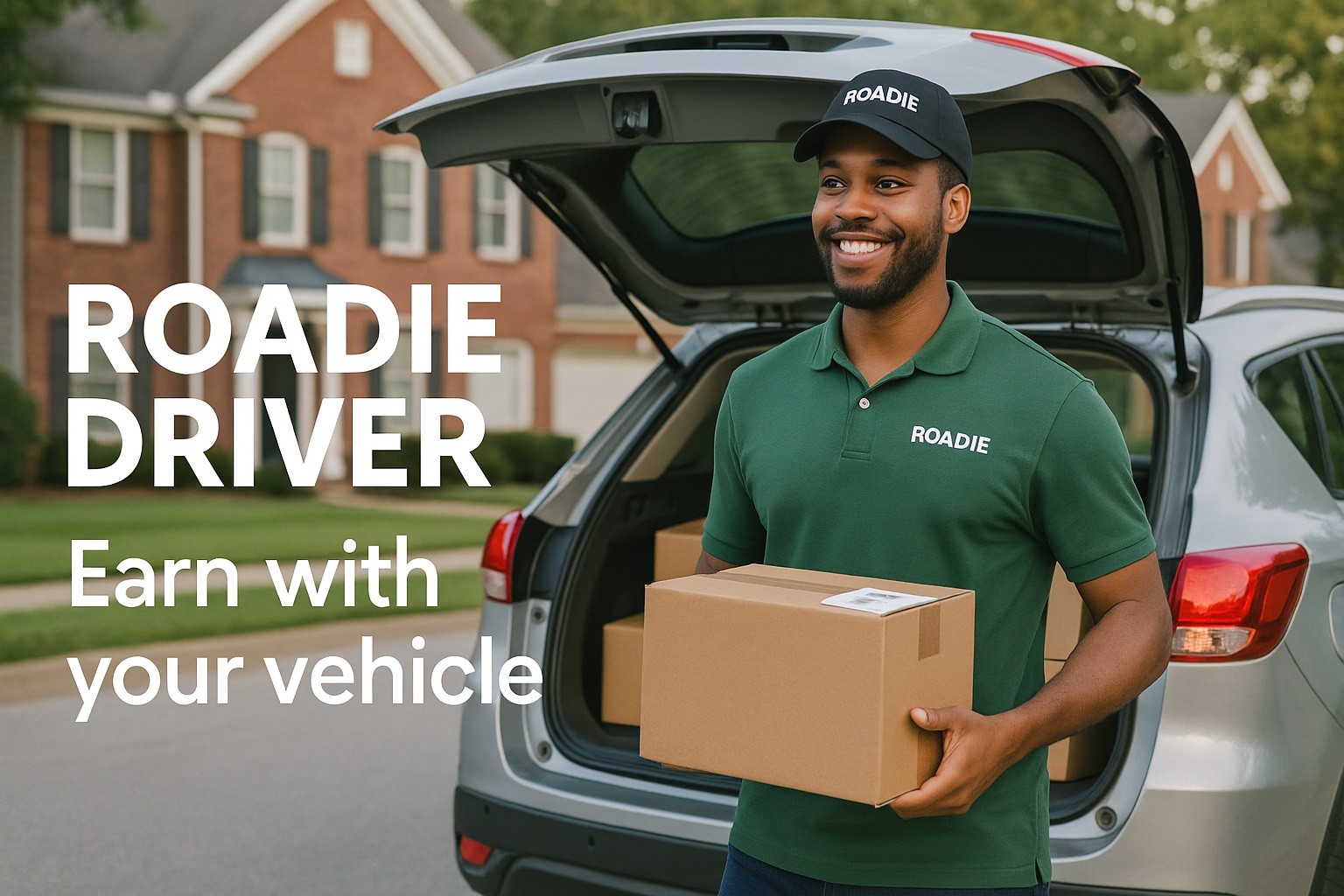
How to Become a Roadie Driver
Go to the Roadie driver portal or download the Roadie Driver app and create an account.
Registration typically takes only a few minutes. Have your driver’s license and bank details handy.
Enter your basics and accept disclosures
Provide contact information, vehicle details, and consent for a background check.
You’ll review disclosures and acknowledgments about the consumer report and privacy policies. Accuracy is critical; mismatched data can delay approval.
Verify your identity
Upload photos of your driver’s license and a selfie as prompted. Roadie may also ask for short videos or biometric checks to combat identity fraud.
Follow the in-app instructions and ensure images are clear and well-lit.
Confirm insurance
Upload proof of your current auto insurance.
If your personal policy excludes deliveries, talk to your insurer about endorsements or consider a policy suited for gig work.
Requirements vary by state and carrier.
Set up how you’ll get paid
Enter your bank information for direct deposit. By default, Roadie pays weekly.
You can also opt into Instant Pay once eligible, which sends funds to your bank more quickly for a small processing fee.
Open the map and offer on gigs
Once you’re approved, you’ll see available deliveries in the app with payout, distance, size/weight notes, time windows, special requirements, and pickup/drop-off details.
Tap into a gig to review instructions, then submit an offer. For larger opportunities and longer routes, look for RoadieXD™ or scheduled “Blocks” where available.
Getting Paid: Weekly vs. Instant
Roadie pays weekly via direct deposit by default, with processing early in the week and funds typically appearing soon after, depending on your bank.
If you prefer faster access to earnings, turn on Instant Pay in the app once you meet eligibility criteria.
Instant Pay is helpful if you need immediate cash flow for fuel, maintenance, or other expenses, but factor in the small fee when choosing.
How Payouts Are Calculated
Rates reflect distance, item size/weight, handling requirements, number of stops, scheduling constraints, and market demand.
Tipping may be available on consumer orders; for retailer and warehouse runs, the posted payout is typically the full amount you’ll receive.
Keep an eye on multi-stop routes and Blocks, which can offer better total earnings per hour, especially if the route is tightly clustered.
Optional Certifications and Add-Ons
Besides wondering how to become a Roadie Driver, certain certifications could make it more affordable.
- TSA certification (airport cargo): Roadie partners with airlines and airport cargo facilities. Completing the platform’s TSA steps opens access to these gigs, which usually require strict ID checks at pickup and secure handling procedures—and often pay more.
- RoadieXD™ (large vehicles): If you operate a cargo van, sprinter, or box truck, RoadieXD™ unlocks one-stop warehouse pickups, scheduled routes, and multi-stop deliveries. These can be steadier and higher-value than ad-hoc gigs, though they may require weekday availability, basic load equipment, and consistent on-time performance.
- Equipment matters: A basic moving dolly, lifting straps, furniture blankets, and a ratchet-strap kit are inexpensive investments that help you protect goods, avoid injuries, and qualify for jobs others decline.
Practical Tips Before You Apply
If big-box and home-improvement stores dominate in your area, a pickup or van will expand your options dramatically.
In dense urban zones with smaller parcels and tight parking, a sedan or hatchback can be perfectly efficient.
In your first weeks, focus on on-time arrivals, clear communication, and careful photo documentation. Strong ratings can help you win better gigs and repeat routes.
Track fuel, tolls, maintenance, and gear costs. Decide whether Instant Pay’s speed outweighs its fee for your situation.
Bottom Line
Learning how to become a Roadie Driver offers a flexible way to monetize the vehicle you already drive. The entry bar is relatively low.
Take a few minutes to set up your profile accurately, equip yourself with basic moving tools, and start with gigs that fit your vehicle and schedule.
With consistent on-time performance and careful handling, you can build a reliable stream of local delivery work and expand.